
Science
Here you will find summaries of, and links to published reports and studies on selenium levels, the impacts of water treatment efforts and more.
Topics
Air pollution

Heliyon, 2023
Spatial distribution of selenium and other potentially toxic elements surrounding mountaintop coal mines in the Elk Valley, British Columbia, Canada
Petryshen, W.
Summary: Moss collect from around Sparwood show terrestrial metal contamination caused by coal dust originating from the Elk Valley mines. Full paper
Environmental Science & Technology Letters, 2022
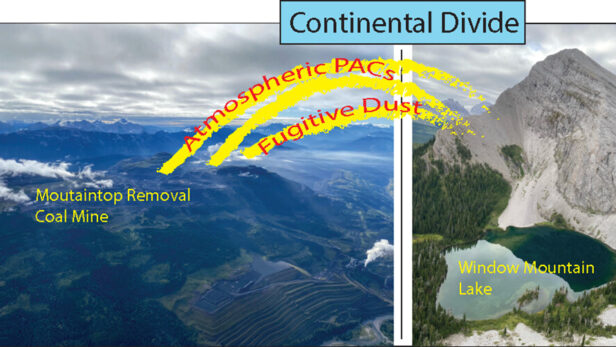
Transboundary atmospheric pollution from mountaintop coal mining
Cooke, C. A., & Drevnick, P. E.
Summary: Dust created through coal mining in the Elk Valley was detected on the opposite side of the continental divide in the eastern slopes of Canada’s Rocky Mountains. A sediment core from a high alpine lake composed of a 30x increase in environmental contaminants that align with coal mined in the Elk Valley. Full paper
Aquatic life
Environmental Research, 2022
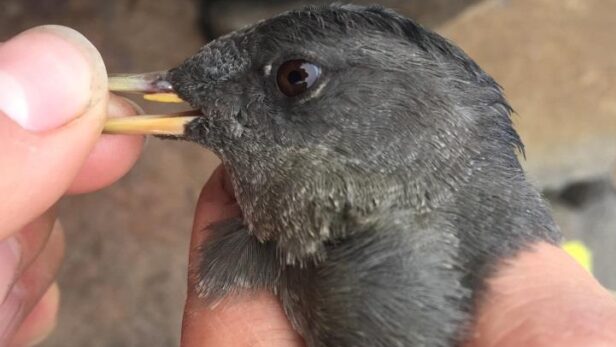
Bioaccumulation and effects of selenium from surface coal mining in an aquatic songbird
English, S. G., Hess, H., Bishop, C. A., Porter, E., Cheng, K. M., & Elliott, J. E.
Summary: Study conducted by Environment and Climate Change Canada to explore the consequences of elevated Selenium concentrations in rivers downstream of coal mines on aquatic songbirds. American dipper blood, feather, and egg content tissue samples, in addition to invertebrates and water chemistry, were collected from 11 reference streams and 9 exposed streams. Seven of the reference streams were located within the Elk watershed, and the remaining were located in western BC. Selenium levels downstream of mining operations exceeded regulations by 20X. Similarly, selenium levels in American dipper eggs collected downstream of the mines were significantly higher. Selenium levels also increased with the age of the bird, providing additional evidence to suggest Selenium bioaccumulates in the food web. No statistical differences in the number of successfully hatched eggs were detected from nests downstream of the mines, compared to mine unimpacted streams; however, no statistical detection is likely due to the study’s small sample size. News article about the study https://www.thefreepress.ca/news/biologists-study-selenium-effects-on-birds-5099445 Full paper
University of Montana, Flathead Lake Biological Station Report, 2007
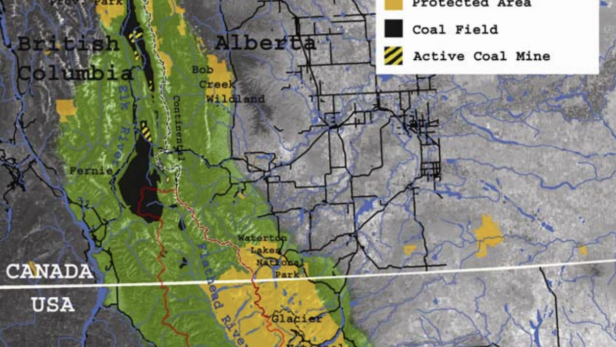
Transboundary Flathead Water Quality and Aquatic Life: Biennial Report
Hauer, F.R. and Sexton, E.
Summary: Nutrient and metal concentration from waters in the Elk Valley are significantly greater than unmined waters in the Flathead watershed. Compared to the Flathead watershed, the Elk had concentrations of Nitrate and Total Presulfate Nitrogen that were approximately 1000x greater; Sulfate was 40-50x greater, and Selenium 7-10x greater. Algal species richness was over two times greater in the Flathead watershed than in the Elk Watershed. Full paper
Featured science
Environmental Science & Technology Letters, 2024
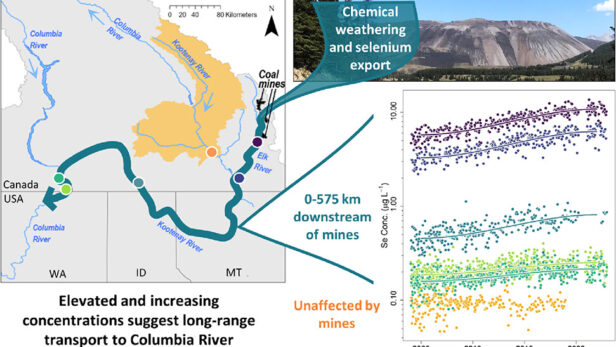
Evidence of Long-Range Transport of Selenium Downstream of Coal Mining Operations in the Elk River Valley, Canada
Foster, M. J., Storb, M. B., Blake, J. M., Schmidt, T. S., Nustad, R. A., & Bussell, A. M.
Summary: Selenium from Elk Valley mines is transported over 575 river km. Flow-normalized Selenium concentrations increased between 35-89% from 2005-2021. No increases were seen at sites unaffected by Elk Valley Pollution. Average annual loads of Se concentrations had increased by an order of magnitude at mine-affected sites. Full paper
Environmental Science & Technology Letters, 2022
Transboundary atmospheric pollution from mountaintop coal mining
Cooke, C. A., & Drevnick, P. E.
Summary: Dust created through coal mining in the Elk Valley was detected on the opposite side of the continental divide in the eastern slopes of Canada’s Rocky Mountains. A sediment core from a high alpine lake composed of a 30x increase in environmental contaminants that align with coal mined in the Elk Valley. Full paper
Water pollution
Environmental Science & Technology Letters, 2024
Evidence of Long-Range Transport of Selenium Downstream of Coal Mining Operations in the Elk River Valley, Canada
Foster, M. J., Storb, M. B., Blake, J. M., Schmidt, T. S., Nustad, R. A., & Bussell, A. M.
Summary: Selenium from Elk Valley mines is transported over 575 river km. Flow-normalized Selenium concentrations increased between 35-89% from 2005-2021. No increases were seen at sites unaffected by Elk Valley Pollution. Average annual loads of Se concentrations had increased by an order of magnitude at mine-affected sites. Full paper
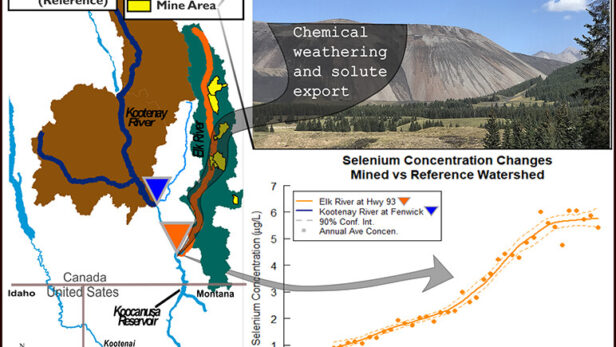
Environmental Science & Technology, 2023
Growth of coal mining operations in the Elk River Valley (Canada) linked to increasing solute transport of Se, NO3–, and SO42– into the transboundary Koocanusa Reservoir (USA–Canada)
Storb, M. B., Bussell, A. M., Caldwell Eldridge, S. L., Hirsch, R. M., & Schmidt, T. S.
Summary: Elk Valley coal mines linked to largest documented increases of selenium, nitrate, and sulfate in recorded literature. Over ten years, 95% of Selenium, 76% of Nitrate, and 38% of sulfate entered Koocanusa reservoir through the Elk River. Concentrations in the reservoir have increased 784%, 581% and 120% for nitrate, selenium, and sulfate respectively, from the 1980s to 2022. The report suggests waste water treatment plants provide some contamination reduction, but only during low flow periods, and the impacts are negligible on the annual load entering Koocanusa reservoir. Full paper